

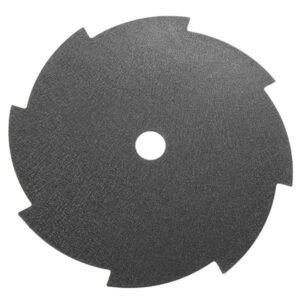
ROTARY HEAVY DUTY ROTARY UNIVERSAL: 200 x 25.4 x 2 MM. – 24 TEETH
BLADE DIAMETER 200MM / 8 INCHES
BLADE CENTRE HOLE DIAMETER 25.4MM / 1 INCH
BLADE THICKNESS 2MM / 5/64 INCHES
THIS ULTRA HAVY DUTY BRUSH CUTTER BLADE IS DESIGNED FOR BRUSH CUTTING WORK.
EFFECTIVELY CUTTING THROUGH DENSE UNDERGROWTH AND OVERGROWN AREAS.
FOR WOODY BRUSHES AND SMALLER TRUNKS UP TO 14 CM IN DIAMETER DISK FOR BRUSH-CUTTERS, 24-TOOTHED, UNIVERSAL STEEL WEED BRUSH-CUTTER BLADE DISK, HEAT TREATED – DESIGNED FOR CUTTING OF WILD WEEDS, TOUGH, MATTED GRASS AND UNDERGROWTH. CAN ALSO BE USED FOR SMALLER BUSHES.
FOR SEARCH: BRUSH CUTTER BLADE, CLEARING SAW BLADE, FORESTRY SAW BLADE, FOREST BRISH BLADE, SAPLINGBLADE, BLADE FOR STIHL BRUSH CUTTERM BLADE FOR HUSQVARNA BRUSH CUTTER, STIHL BRISH CUTTING BLADE USA, USA BRUSH CUTTER BLADES, HIGH QUALITY BRISH CUTTER BLADE, 200MM BRUSH CUTTER BLADE, ROTARY BRUSH CUTTER BLADE.
8″ X 1″ BRUSH CUTTER BLADE
Things to Know About Brush Cutter Blades
Brush cutter blades are typically manufactured with two common centre hole sizes: 25.4mm (1″) and 20mm (25/32″), allowing them to fit most standard brush cutters and clearing saws. Always check your machine’s arbor size before selecting a blade.
Blade thickness and diameter play an important role in cutting performance. Thicker blades are heavier, which means they carry greater kinetic energy while spinning. This can help maintain momentum when cutting tougher material. However, a thicker blade must also remove more timber during the cut, which can cause the blade to slow down more noticeably when it begins to enter branches or heavy brush.
Blade diameter also affects tip speed. At the same engine speed (for example 10,000 RPM), a larger diameter blade such as 225mm will have a higher tip speed than a smaller blade because the cutting edge travels a greater distance each revolution.
A thinner blade, such as a 1.6mm blade, removes less material with each pass through the wood. Because it cuts a narrower kerf, it generally loses less speed during cutting, allowing it to maintain higher effective cutting speed. However, thinner blades are lighter and therefore carry less stored kinetic energy.
For this reason there is always a balance when choosing a brush cutter blade.
-
Thinner blades: Faster cutting and less drag, but lower momentum.
-
Thicker blades: Greater momentum and durability, but increased resistance when cutting.
Selecting the right combination of blade thickness and diameter for your machine’s power output and the type of material being cut will deliver the best performance and efficiency.


Reviews
There are no reviews yet.